
Scaffolding for Roof Repairs Brisbane: What to Consider
Roof work can look straightforward from the ground. The right access plan depends on what needs repairing, the shape and height of the building, and what is happening around the property.
A practical guide for homeowners, builders and roofing trades
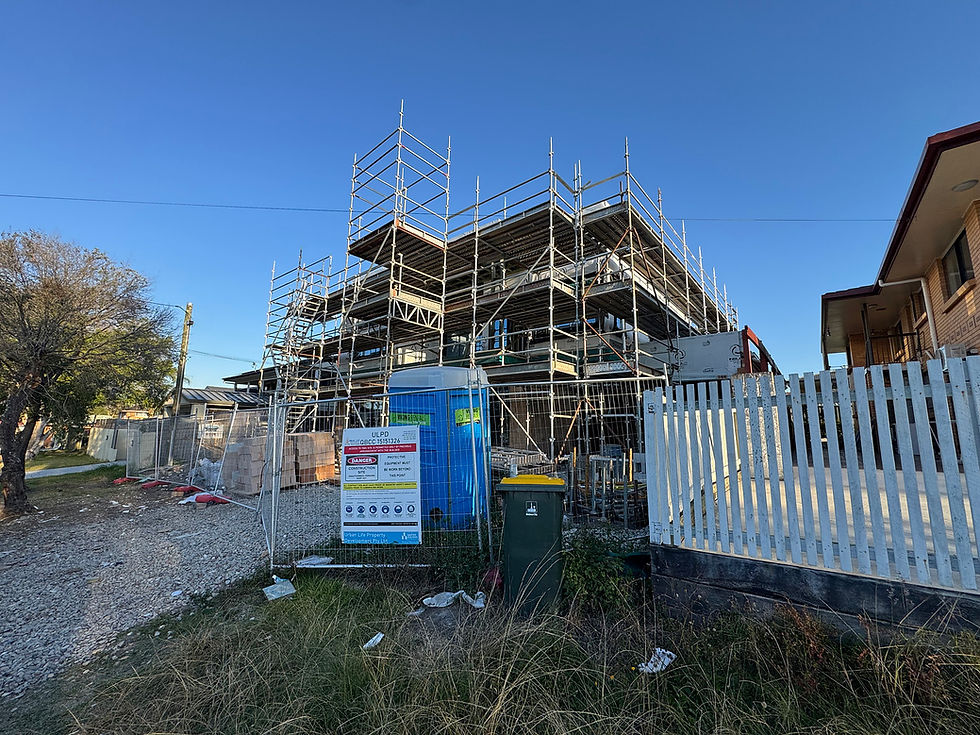
When planning scaffolding for roof repairs in Brisbane, the first question is not simply which scaffold to hire. It is how the roofing work will be reached and completed while the risks around access, roof edges, fragile surfaces and the surrounding property are properly considered.
Some jobs involve a short repair to one accessible area. Others include guttering, fascia, roof replacement, painting or work across more than one elevation. Those jobs can create very different access needs. This guide explains the main factors to consider before arranging roof work and what information helps a scaffolder assess the site.
The key point: scaffolding is one possible way to provide a stable work platform and fall-prevention measures. It is not automatically required for every roof repair, and the suitable controls depend on the task and site-specific risk assessment.
How Roof Height, Pitch and Site Access Affect Scaffolding for Roof Repairs Brisbane Projects
Scaffolding is worth discussing early when the work extends along a roof edge or across several parts of a building, when several trades need access, or when workers need a stable platform beside the roof rather than a single point of access.
Roof repairs or replacement across a larger area: access may need to follow multiple roof sections or elevations as the work progresses.
Gutters, fascia and eaves: these tasks often take place around roof edges and may require planned access along the outside of the building.
Exterior painting, cladding or rendering: if the project includes work beyond the roof itself, a coordinated access plan may reduce the need to set up separate access for each trade.
Multi-level or hard-to-reach areas: roof height, changes in level and limited ground access can make the choice of access method more complex.
These are situations to assess, not a checklist that automatically means scaffold is the only suitable option. The scope, site conditions, work method and applicable safety requirements should guide the decision.
Five site conditions that can change the access plan
1. Roof height, pitch and shape
A steep roof, multiple roof lines, upper-storey eaves or changes in building height can affect where workers need to reach and what protection is appropriate. A low roof can still present a serious risk if a fall could lead onto a hard surface, fencing, retaining walls or other hazards.
2. Roof condition and fragile surfaces
Before selecting an access method, the team needs to understand any known fragile roofing, skylights, openings or areas that may not support a person's weight. People should not assume a roof is safe to walk on because it looks solid from the ground. Any assessment should be made by appropriately qualified people before work begins.
3. Ground conditions and side access
Sloping blocks, garden beds, retaining walls, narrow side paths, driveways and neighbouring buildings can affect where a ground-supported scaffold can be positioned. Photograph the site from safe ground-level viewpoints and note any restrictions rather than trying to inspect roof areas yourself.

4. Power lines, paths and neighbouring property
Overhead electrical lines, shared driveways, footpaths, entrances and adjacent properties need to be identified during planning. Do not assume there is adequate clearance around a scaffold or that a public or shared access route can be obstructed. Electrical clearances and any required controls must be confirmed by the responsible qualified people.
5. Work sequence and the trades involved
The access needed for a roof plumber may differ from the access needed for roof-sheet replacement, fascia repairs, exterior painting or follow-on work. When the sequence and trades are known early, access can be considered as part of the overall job rather than an afterthought.
Does Queensland law require scaffolding for every roof repair?
No single answer applies to every roof repair. The work health and safety controls depend on the work, the fall risk, roof conditions and the circumstances at the site. Scaffolding can be one fall-prevention measure, but the requirement is to manage the risks using controls suitable for the job, not to assume one access system is compulsory for every situation.
WorkSafe Queensland explains that housing construction work involving a risk of falling from 3 metres or more, or work on a roof with a slope over 26 degrees, requires specific fall-prevention controls, with fall-arrest controls where fall prevention is not practicable. The guidance also explains that risks below these conditions still need to be assessed and controlled where necessary. Construction work involving a fall risk of more than 2 metres is classed as high-risk construction work and requires a Safe Work Method Statement.
Read the current WorkSafe Queensland guidance on working at heights and the Safe Work Australia information sheet on safe work on roofs. This article is general information, not a site-specific safety assessment or legal advice.
Scaffold, an elevated work platform or another access method?
The best access method depends on what needs to be reached and how the job will be carried out. Scaffolding may be useful where a stable platform is needed along part of a building or where work continues across several stages. An elevated work platform or another suitable control may fit a different type of job, depending on ground conditions, reach, space and the required work method.
Question | Why it matters |
Where is the work? | Roof edges, eaves, gutters and multiple elevations can call for different access arrangements. |
How long will access be needed? | Several trades or multiple stages may change what is practical across the duration of the project. |
Can equipment be positioned safely? | Ground slope, space, boundaries, power lines and pedestrian routes can limit some options. |
What protection is required? | The method must follow an appropriate risk assessment and the applicable work health and safety requirements. |
Do not select a system from a photo alone or choose only on initial cost. Share the actual work scope and site constraints so the access options can be assessed. You can also review Hasscaff's Kwikstage scaffolding and T-Lite aluminium scaffolding information. Where conventional ground-based scaffold is difficult to position, discuss whether a specialist option such as Hang-On scaffold is relevant to the particular structure and task.
What information should you prepare before requesting a quote?
You do not need to have a scaffold system selected before you get in touch. Start with the work and the property. These details help make an initial discussion more useful:
The site address and preferred contact person.
A short description of the work, such as roof repairs, gutter replacement, roof-sheet replacement or external painting.
Clear photos taken from ground level showing the building, access routes and the sides where work is planned.
Any available plans, drawings or information about building height and roof layout.
Known constraints such as sloping ground, narrow side access, nearby power lines, shared paths or occupied areas.
The approximate start date, expected duration and other trades that may need access.
If you do not know the height, roof pitch or best access method, say so. Do not climb onto a roof or enter a hazardous area to collect details. The site assessment should be arranged with the right people and precautions.
Plan access before the roofing work is booked in
Roof repairs become easier to coordinate when access is considered alongside the scope, timing and other trades. That does not mean every job needs scaffold. It means choosing a method after considering how the work will be reached, the risks that need to be controlled and the limits of the property.
Hasscaff provides scaffolding services across South East Queensland. Read the relevant Brisbane service area, Gold Coast service area or Sunshine Coast service area for local coverage and site context. To see examples of the company's work, visit the Hasscaff projects page.
Common questions about roof-repair scaffolding
Is scaffolding always needed for roof repairs?
No. The suitable access and fall-prevention measures depend on the task, roof and building conditions, fall risks and applicable requirements. A site-specific assessment should determine what controls are appropriate.
Does the roof pitch affect scaffolding requirements?
Yes. Roof pitch is one of the factors used to assess risks and select controls. WorkSafe Queensland's housing-construction guidance specifically addresses roofs with a slope over 26 degrees, alongside fall-risk height thresholds.
How much does scaffolding for roof repairs cost?
There is no reliable price that fits every property. Cost depends on the scope and height of the work, how much access is needed, site access and ground conditions, the duration, and any project-specific requirements. Provide photos and a clear work description to start an accurate discussion.
When should I organise access for roof repairs?
Raise it while the roofing scope and work dates are being planned, especially if several trades or multiple sides of the building are involved. Early discussion gives the project team time to assess access constraints before the work is due to start.
Safety references: WorkSafe Queensland: Work at heights; WorkSafe Queensland: Scaffolding; Safe Work Australia: Safe work on roofs. Refer to the relevant regulator and competent professionals for current, job-specific requirements.
Planning roof work?
Share the location, type of work, access constraints and expected dates. Hasscaff can discuss the site requirements and whether its scaffolding services may suit the project.
Explore more from Hasscaff
What Is Hang-On Scaffold? Learn about structure-supported access for selected difficult-access sites. Hang-On Scaffold Service Explore the system's potential applications and limitations.About Hasscaff Learn more about the company. Scaffolding Service Areas Explore coverage across South East Queensland.


Comments